Hail rarely stops at a few roof dents. Here is everything a Colorado hailstorm can do to a vehicle, and what it takes to put each part of it right.
Colorado sits in the middle of the country's most active hail corridor, and the Front Range takes the worst of it. Most drivers walk out after a storm, see a scattering of dents on the hood, and assume that is the whole problem. It usually isn't.
Hail hits a vehicle from above and at an angle, driven by wind, and it finds every surface that isn't vertical. Here is what it actually damages, and what repairing each part properly involves.
Dents in the panels
This is the damage everyone sees: the roof, hood, trunk lid, and the upper surfaces of the fenders and doors. What matters is not the number of dents but their depth, their diameter, and whether the paint over them has broken.
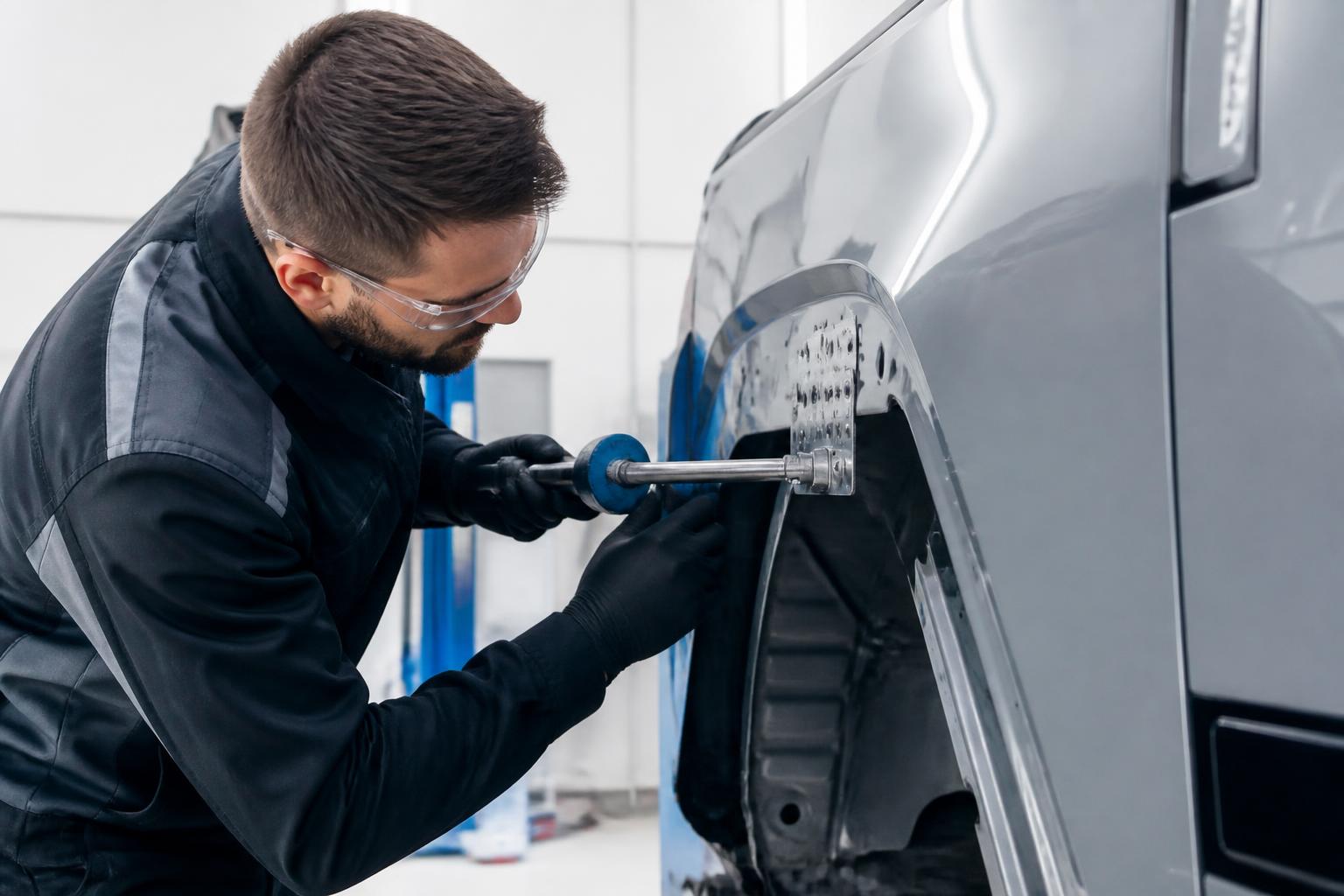
Shallow dents with the paint intact are the ideal case. They can usually be removed with paintless dent repair (PDR) — technicians work the metal back to shape from behind the panel with specialized rods and picks, leaving your factory paint completely untouched. Nothing is filled, sanded, or resprayed, so the vehicle keeps its original finish, which matters for both durability and resale value.
Deep dents, dents with a sharp crease, or dents where the paint has cracked cannot be fixed this way. Those panels need conventional body work and refinishing, or in severe cases replacement.
Cracked and chipped paint
A hailstone that hits hard enough can fracture the clear coat even where the dent is barely visible. Left alone, those fractures let moisture reach the primer and eventually the metal, and Colorado's freeze-thaw cycles accelerate it. What starts as a cosmetic speck becomes corrosion under the paint a couple of winters later.
This is the reason a "wait and see" approach to hail costs more later than it saves now.
Glass and sunroofs
Windshields take direct hits and can chip, star, or crack outright. Sunroof and moonroof glass is more vulnerable than most people expect — it is horizontal, which is exactly the angle hail arrives at, and a shattered sunroof also means water and glass inside the cabin.
Rear windows and quarter glass can crack too, especially on vehicles parked with one side exposed to wind-driven hail.
Trim, mirrors, and lamps
Side mirror housings, roof rails, antenna fins, plastic body cladding, and headlight and taillight lenses all crack under hail. These are easy to overlook on a walk-around and easy to leave off an estimate, which is one reason it is worth having a body shop document the vehicle rather than relying on a quick glance.
Sensors and cameras
Modern vehicles carry radar units, cameras, and parking sensors mounted in the grille, the windshield, the mirrors, and the bumpers. If hail damages one — or if a windshield with a forward-facing camera has to be replaced — the driver assistance systems tied to it need recalibration before they work correctly again. A car can look repaired and still have automatic braking aimed at the wrong spot.
The parts you can't see
Wind-driven hail gets into the engine bay through the grille and can damage the condenser, and it collects in cowl drains and sunroof channels. Water that would normally drain away instead backs up into the cabin. Interior water damage after a storm is often traced back to hail debris in a drain, not to a leak.
How a hail repair is actually put together
A proper hail estimate is written panel by panel, with a decision for each one:
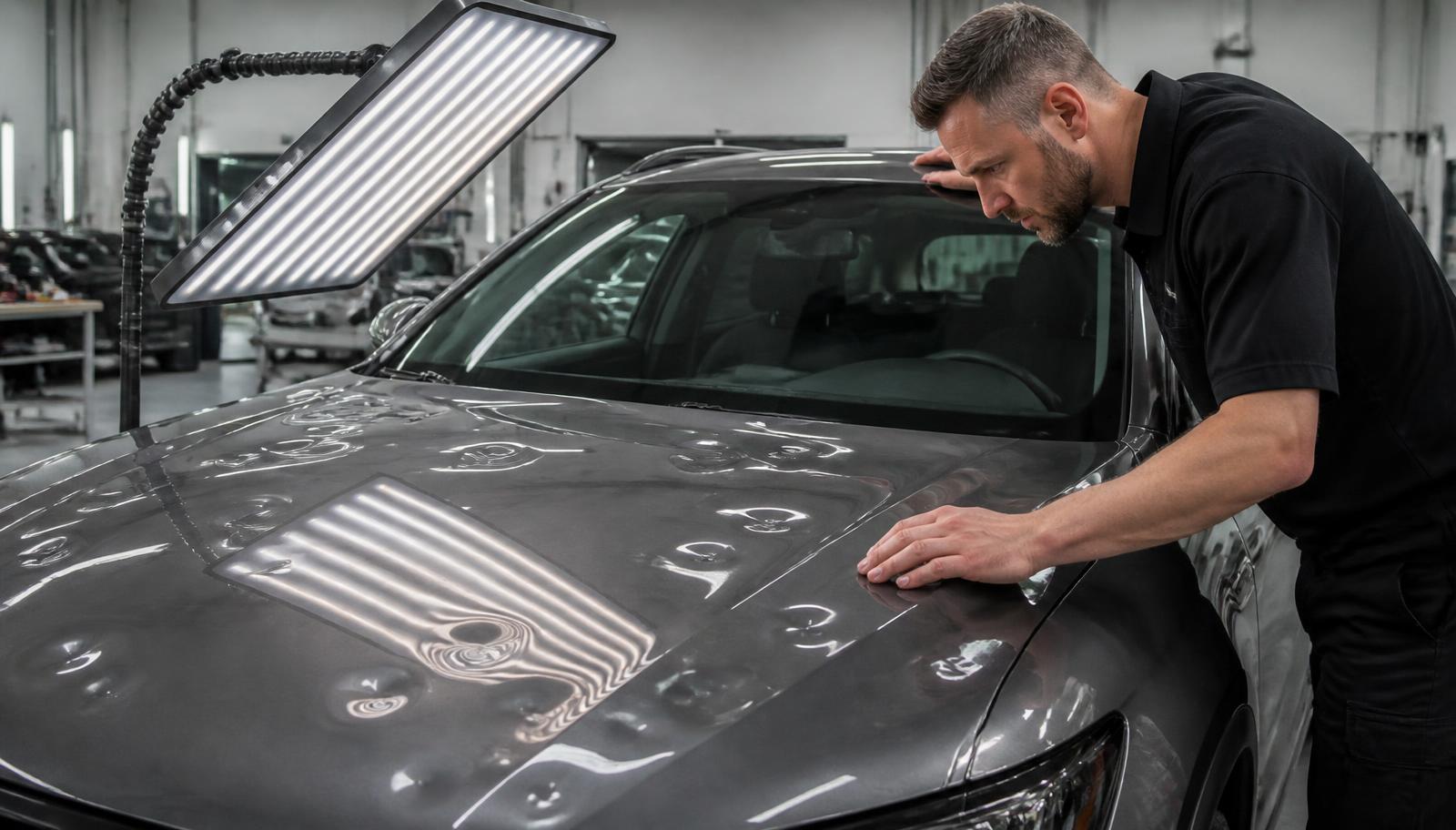
- 1.Documented inspection. Every dent is counted and measured, ideally under specialized lighting that makes shallow dents visible. This document is what your claim is built on.
- 2.Claim filing. Photos, dent counts, and the estimate go to your insurer. In Colorado, you choose the shop that does the work — your insurer can recommend one, but cannot require it.
- 3.Method selection per panel. PDR where the paint is intact and the metal will move; conventional repair and refinishing where it will not; replacement where the panel is beyond either.
- 4.Glass, trim, and calibration. Damaged glass and trim are replaced, and any affected driver assistance systems are recalibrated.
- 5.Final inspection. The vehicle is checked under proper lighting, cleaned, and walked through with you at pickup.
What to do after a Colorado hailstorm
Photograph the vehicle where it sat, including the date. Don't let anyone talk you into a same-day parking-lot repair by a crew that appeared after the storm and will be in another state next week — hail chasers are a fixture of Front Range summers and their work has no warranty you can collect on.
Get the car looked at by a shop that will still be here, and have the inspection documented before you talk numbers with anyone.
Get your vehicle assessed
Jewell Collision and Hail Repair has been repairing hail damage for Denver-area drivers since 1980, from two shops — Lakewood and east Denver. Hail assessments are free, we file and manage the claim with your insurer, and our workmanship carries a limited lifetime warranty.
Next Step
Get a Free Repair Estimate
Our Lakewood and East Denver teams will inspect your vehicle, explain the repair plan, and coordinate with your insurance carrier.
Request an Estimate