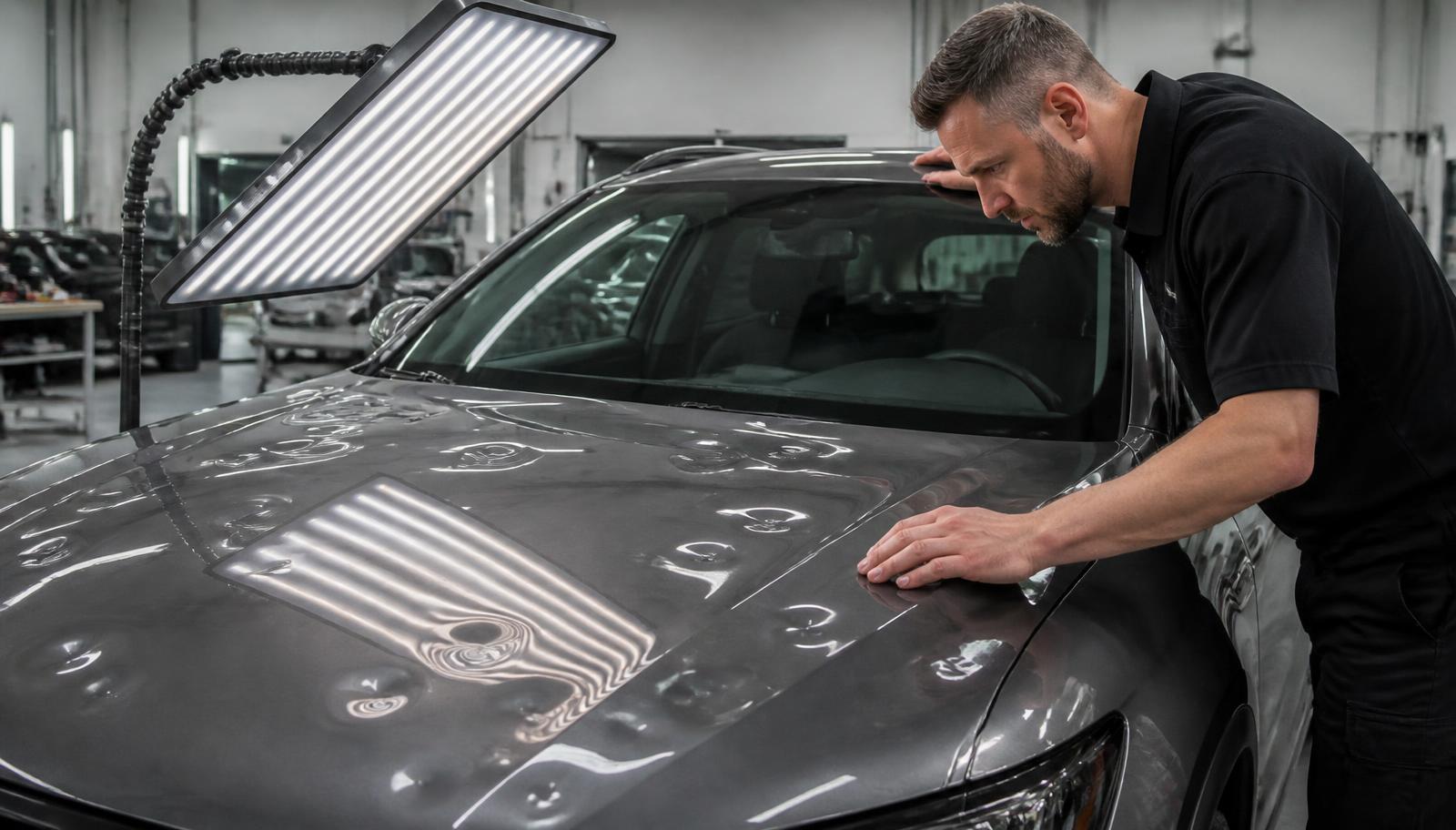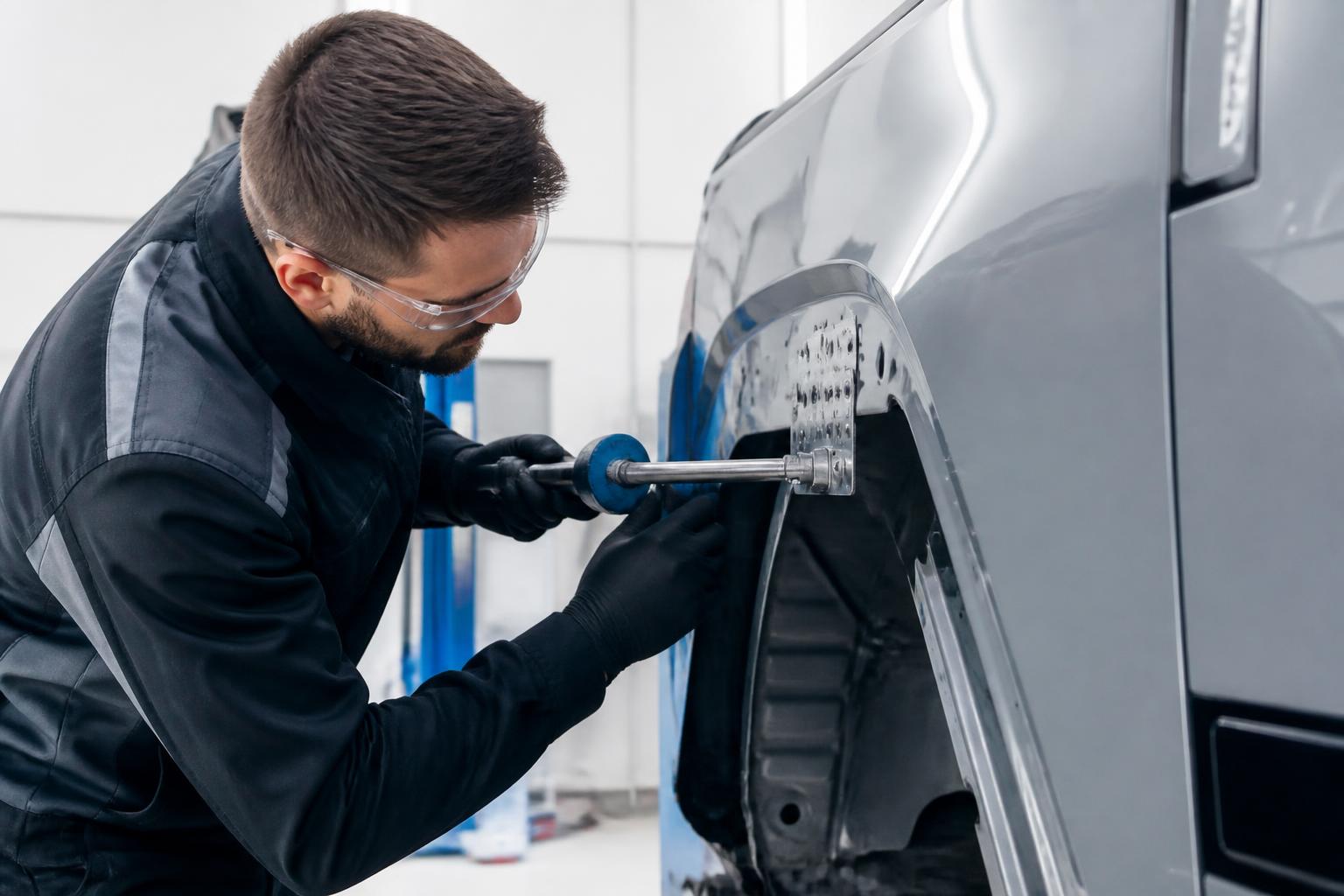
Why a Rivian can't be repaired like a conventional truck, what a certified collision center does differently, and what to expect on timelines, parts and insurance in Colorado.
A Rivian looks like a truck and drives like a truck, but structurally it has more in common with an aircraft panel than with a body-on-frame pickup. That difference is the whole reason Rivian runs a certification program for collision repair, and the reason a shop that fixes your neighbor's F-150 beautifully may not be allowed to touch yours.
Here is what Rivian collision repair actually involves, and what to expect if you're standing in a parking lot in Denver looking at a damaged R1T or R1S right now.
Why a Rivian isn't repaired like a conventional vehicle
Three things drive it.
A high-voltage battery under the floor. Before any structural, welding, or heat-intensive work happens, the high-voltage system has to be safely isolated and verified, and the pack has to be inspected for impact damage. Doing body work on a live pack is a genuine safety hazard, not a formality.
An aluminum-intensive body. Aluminum doesn't behave like steel. It work-hardens, it can't be pulled and reheated the same way, and it needs dedicated tooling kept isolated from steel dust to avoid galvanic corrosion. Certified shops maintain a separate clean aluminum area and equipment for exactly this reason.
Dense driver-assistance hardware. Cameras, radar, and ultrasonic sensors sit in the windshield, mirrors, grille and bumpers. Replace or move any of them — or replace a windshield — and the systems tied to them need recalibration to documented specification before the vehicle is safe to hand back.
What "Rivian Certified Collision Center" actually means
Certification isn't a plaque. To hold it, a shop has to demonstrate it has:
- Access to Rivian's current repair procedures and technical documentation
- The specific tooling, fixtures and welding/bonding equipment Rivian requires
- Technicians trained in high-voltage safety and EV-specific repair
- The ability to order genuine Rivian structural parts
- Facilities that meet Rivian's requirements for aluminum work and refinishing
That last point matters more than people expect: many structural Rivian parts are only sold to certified facilities. A non-certified shop physically cannot buy them.
What the repair process looks like
- 1.Damage assessment and diagnostic scan. Visible damage is documented and the vehicle is scanned so hidden electrical and system faults are captured before anything is disassembled.
- 2.High-voltage isolation and battery inspection. The pack is de-energized to procedure and checked for any impact damage.
- 3.Repair plan built from Rivian procedures. Each panel gets a documented decision — repair, or replace with a genuine part — based on Rivian's requirements rather than on what's quickest.
- 4.Structural and body repair. Measured on a fixture bench where needed, using the specified riveting, bonding and welding methods for aluminum.
- 5.Refinishing. Color-matched refinishing and blending; Rivian's more complex finishes need careful spray-out matching rather than a code-and-go approach.
- 6.Calibration and re-scan. ADAS cameras and radar are recalibrated, the vehicle is re-scanned clean, and road tested.
- 7.Final inspection and delivery. Quality check under proper lighting and a walkthrough with you.
How long does it take?
Honestly: usually longer than an equivalent gas vehicle, and the delay is almost never the labor. It's parts. Rivian structural and body components come through a smaller supply network than a Ford or Toyota, and a back-ordered part can add weeks to an otherwise straightforward job.
Two things help. Get the repair plan written and parts ordered early rather than waiting on claim back-and-forth, and ask your shop for the parts status directly instead of guessing. Every timeline estimate you get before parts are confirmed is a guess.
Insurance, and your right to choose the shop in Colorado
Your insurer can recommend a shop. In Colorado, it cannot require you to use one. That matters more for a Rivian than for almost any other vehicle: an insurer's preferred network shop may not be Rivian certified, and a repair completed outside the certification program can involve non-genuine parts and procedures that were never written for your vehicle.
If an adjuster's estimate assumes conventional repair methods or aftermarket structural parts, a certified shop can supplement the estimate with the manufacturer's documented procedures. That's a normal part of the process, not a fight.
Questions worth asking any shop before you commit
- Are you a Rivian Certified Collision Center? (Ask to see it, not just hear it.)
- Do you have a dedicated aluminum repair area and tooling?
- Are your technicians trained in high-voltage safety?
- Will you use genuine Rivian parts for structural components?
- Do you perform ADAS calibration in-house or sublet it, and will I get the documentation?
- Will you give me a pre- and post-repair scan report?
A shop that answers all six comfortably is a shop that has done this before.
Rivian collision repair in Denver and Lakewood
Jewell Collision and Hail Repair is a Rivian Certified Collision Center and an I-CAR Gold Class facility, repairing vehicles for Front Range drivers since 1980 from two shops — Lakewood and east Denver. We work directly with your insurer, use Rivian's documented procedures and genuine parts for structural work, and back qualifying repairs with a limited lifetime warranty.
See our Rivian certified collision repair page, read about EV collision repair, or get a free estimate.
Next Step
Get a Free Repair Estimate
Our Lakewood and East Denver teams will inspect your vehicle, explain the repair plan, and coordinate with your insurance carrier.
Request an Estimate